Birding
&
Wildlife Viewing
Where the Flyway Stops to Rest
Every spring and fall, hundreds of thousands of birds funnel through Box Elder County, where the Bear River meets the Great Salt Lake. Tundra swans fill the marshes by the tens of thousands, bald eagles line the cottonwoods in winter, and avocets and stilts nest close enough to watch from your car. Bring binoculars and a full tank, and plan to stay longer than you think.
Quick Facts
Bird Species
200+ at the refuge
Swan Season
Mid-October–December
Auto Tour
12-mile loop
Bald Eagles
Willard Bay in winter
Summer Highlight
Baby grebes
Visitor Center
Wildlife Education Center
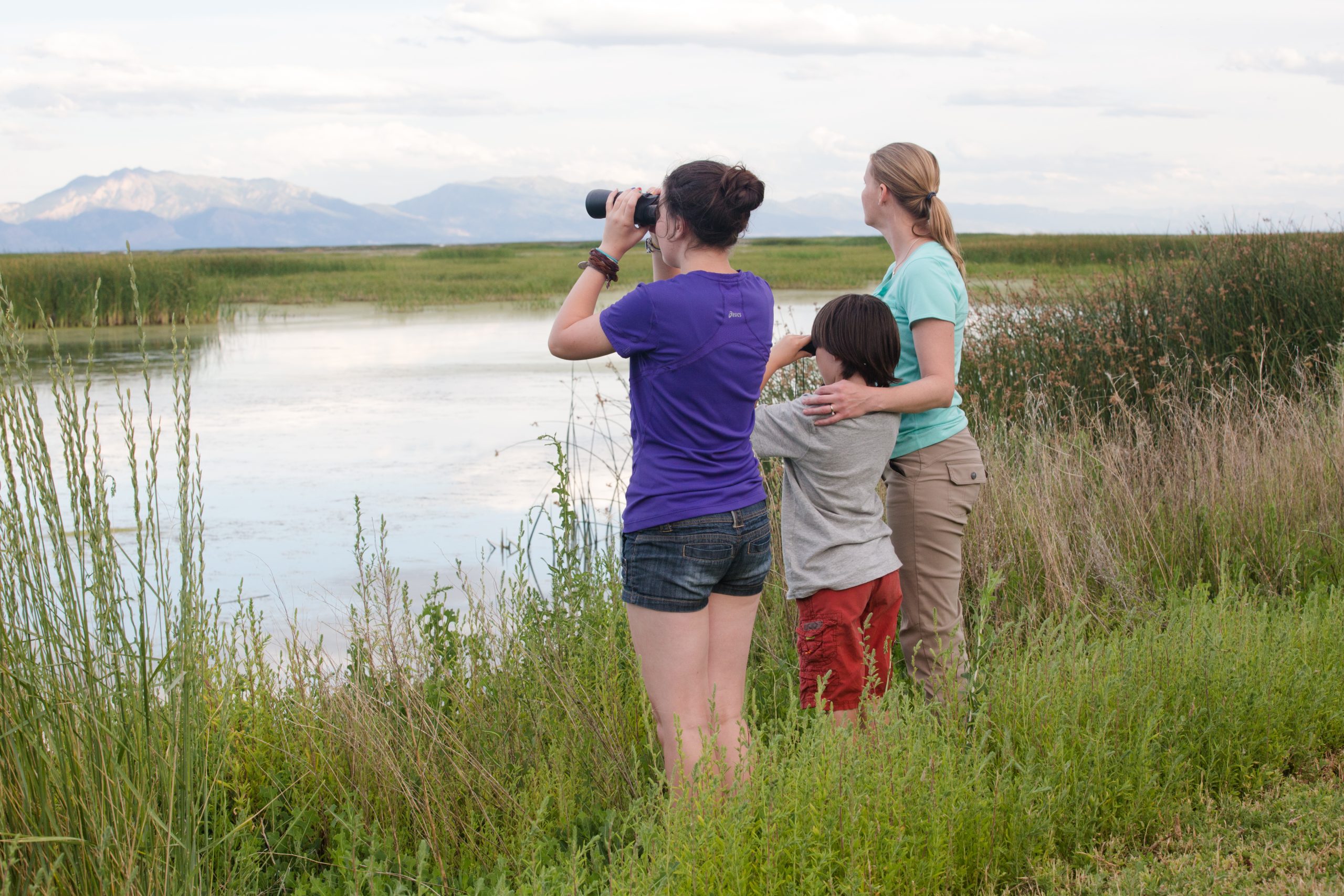
Where to watch wildlife in Box Elder County
The heart of birding here is the wetlands west of Brigham City, where freshwater from the Bear River spreads into the largest freshwater marshes on the Great Salt Lake. The Bear River Migratory Bird Refuge is the main draw, with a visitor center just off I-15 and a 12-mile auto tour route through the marsh. Nearby, the Salt Creek Waterfowl Management Area and Willard Bay add swans, eagles and shorebirds to the list.
Head into the mountains and the wildlife changes. Mountain goats work the cliffs around Willard Peak, deer and elk move through Box Elder Canyon, and every fall, hawks and eagles ride the winds south along the Wellsville ridge. Whatever the season, something is passing through.
Where to Go
Bear River Migratory Bird Refuge
Year-round · 12-mile auto tour · Visitor center off I-15 exit 363
This is one of the best birding spots in the West, and it’s easy to get to. Start at the Wildlife Education Center, just a quarter mile west of I-15, for exhibits, a short film and 1.5 miles of walking trails. Then drive 12 miles west to the auto tour route, a 12-mile loop through open marsh where birds often sit right beside the road. Your car works as a blind, so stay inside and you’ll get closer than you would on foot. Tune in to the refuge’s audio tour as you drive.
Willard Bay State Park
Best in winter · Bald eagles and waterfowl · I-15 exit 357
In winter, bald eagles roost in the cottonwoods along Willard Bay’s shoreline, and the park is one of northern Utah’s most reliable places to see them. Late January and February are the peak months. Watch for loons and other diving birds on the open water, and look for osprey in summer.
Salt Creek Waterfowl Management Area
Spring and fall · Swans and shorebirds · Viewing knoll
A quieter alternative to the refuge, managed by the Utah Division of Wildlife Resources. In March and again in fall, tundra and trumpeter swans stop here to rest. Compton’s Knoll, a small hill on the southeast side of the area, gives you a raised view over the wetlands. Spring visitors may also spot burrowing owls, long-billed curlews and willets.
Wellsville Mountains Raptor Migration
Fall · Strenuous hike · Hawks and eagles
The Wellsville ridge is where HawkWatch International got its start, and every fall, thousands of hawks, falcons and golden eagles ride the updrafts south along it. Getting to the lookout takes a steep hike of a couple of hours, but on a good day the sky is full of raptors.
Mountain Wildlife
Summer and fall · Mountain goats, deer, elk · High-clearance road
The high country has bigger animals. Mountain goats are regulars on the cliffs around Willard Peak and Inspiration Point, and deer and elk move through Box Elder Canyon and the Mantua area, especially at dawn and dusk. The road to Inspiration Point usually opens in July.
What You'll See by Season
Spring
(March-June)
Geese and ducks start arriving in early March, along with migrating swans. Shorebird migration runs from early April to mid-May, with birds in their brightest breeding colors.
Summer
(June–August)
More than 70 species nest at the refuge. Look for goslings in May, then ducklings, young avocets and black-necked stilts in June and July. In July, young western grebes ride on their parents’ backs.
Fall
(August–December)
Shorebirds peak in mid-August. Up to half a million ducks and geese gather on the refuge, and more than 30,000 tundra swans arrive from mid-October through December.
Winter
(December–March)
Bald eagles roost at Willard Bay and the refuge. Northern harriers, rough-legged hawks and prairie falcons hunt over the frozen marsh.
Before You Go
Timing
Early morning and late afternoon are best for birds and light. Midday in summer is hot and quiet.
Stay in Your Car
On the auto tour, your vehicle is the best blind you’ve got. Birds will often stay put for a car but fly as soon as a door opens.
Bring the Gear
Binoculars are a must, and a spotting scope helps on the open marsh. Pack water, snacks and bug spray for summer.
Visitor Center Hours
The Wildlife Education Center is open Tuesday through Saturday, 10 a.m. to 4 p.m. The auto tour route and trails are open year-round from sunrise to sunset, weather permitting.
Frequently Asked Questions
Plan Your Visit
Birds stop here to rest and refuel, and you can too. Find a place to stay, a table in Brigham City, and a few more corners of Box Elder worth exploring.